Why will this work?
Creating a revision planner will help you get more organised. You can give a time slot for each subject and even topic, ensuring you cover all necessary material. A planner allows you to set and track your study goals, making your revision more focused and effective. This will:
- Reduce Stress: Knowing you have a structured plan can alleviate anxiety and help you feel more in control.
- Ensure Balanced Revision: It prevents you from neglecting any subjects or topics by providing a balanced study schedule.
- Improve Time Management: A planner helps you manage your time efficiently, avoiding last-minute cramming.
How?
- Assess Your Subjects and Topics
- List all the subjects you need to revise.
- Break down each subject into specific topics or units.
- Determine Your Available Time
- Identify the total time you have until your exams.
- Consider your daily and weekly commitments to find available study slots.
- Set Priorities
- Prioritise subjects and topics based on difficulty and importance.
- Allocate more time to challenging or high-priority areas.
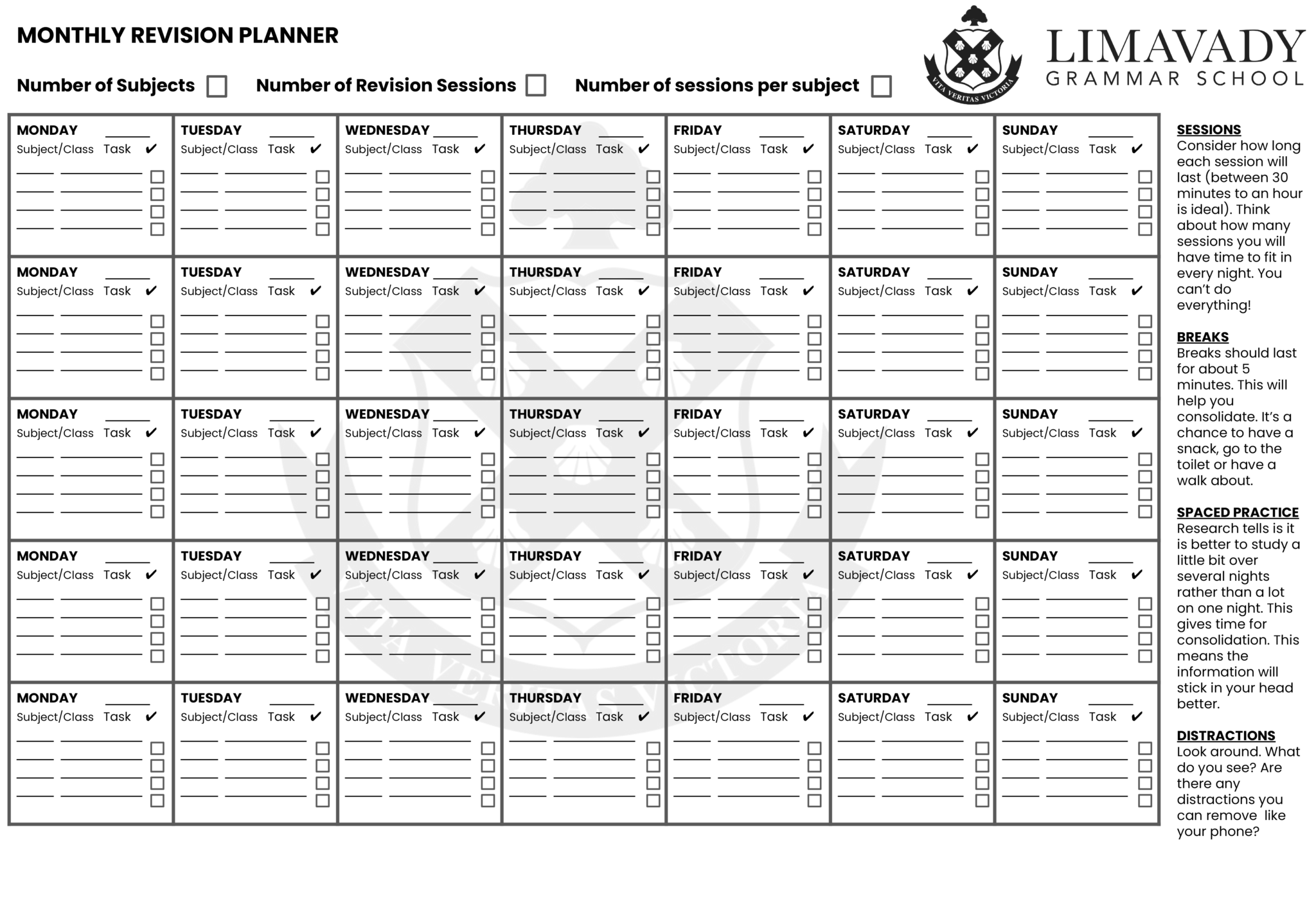
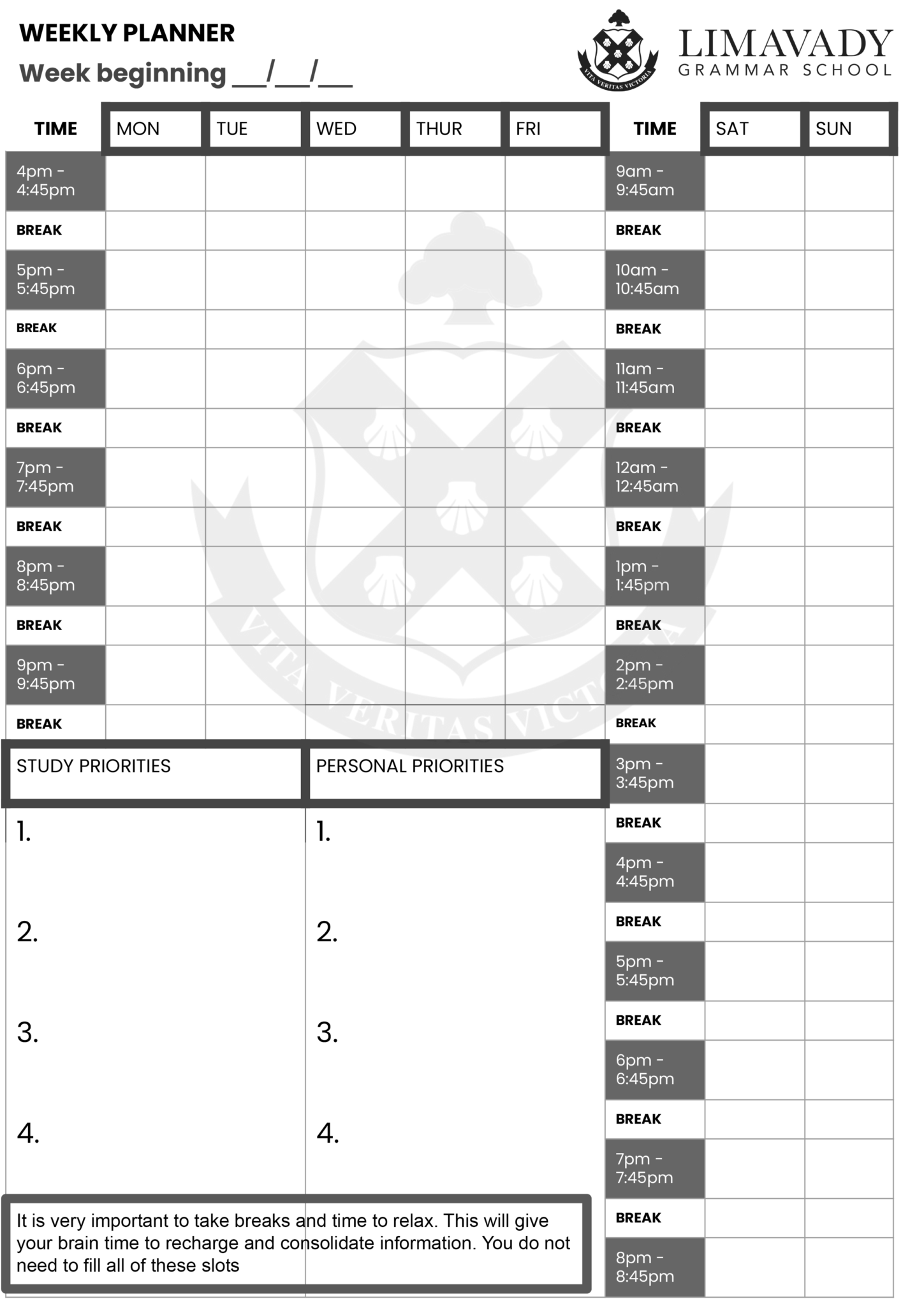
- Create a Weekly Schedule (you can use the weekly on monthly timetables we have provided)
- Divide your available time into study sessions.
- Ensure each session has a clear focus (e.g. Mathematics: Algebra).
- Balance Study and Breaks
- Include regular breaks to avoid burnout.
- Use techniques like the Pomodoro method (25 minutes of study, 5-minute break).
- Incorporate Spaced Practice
- Plan to revisit topics at intervals to reinforce learning.
- Schedule review sessions for previously studied material.
- Be Realistic and Flexible
- Set achievable goals for each study session (most people try to do too much).
- Allow flexibility to adjust your timetable as needed.
- Stay Consistent and Motivated
- Stick to your timetable as closely as possible.
- Reward yourself for meeting study goals to stay motivated.