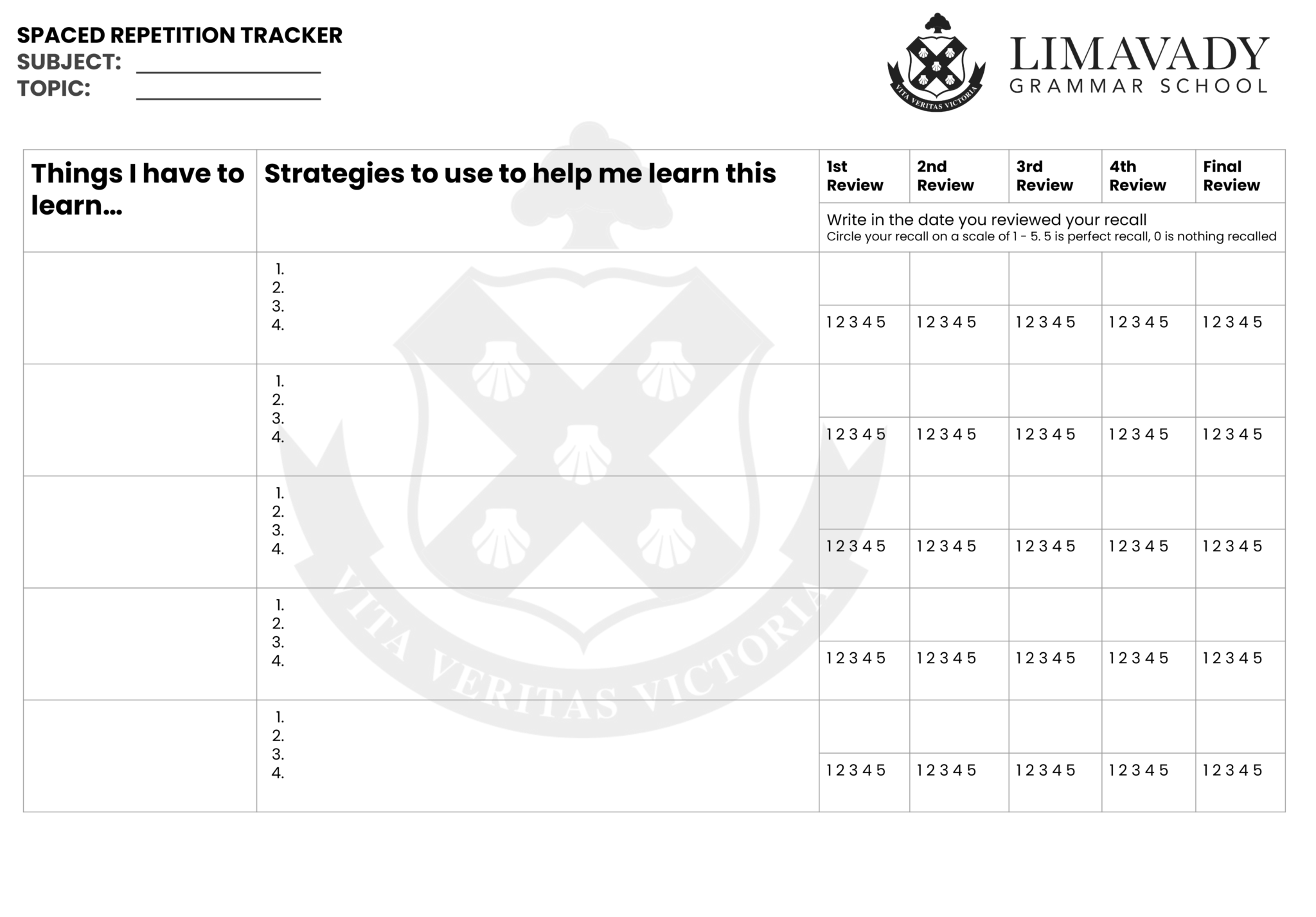

Why will this work?
Spaced repetition acts like a catalogue, training your brain to find the information when you need it. If you think of your brain as a muscle, making it work to find a piece of information is training that muscle to get stronger and find the information more easily in the future.
How?
Spaced practice is a learning technique that involves spreading out study sessions over time rather than cramming all the material in one go. Here’s a breakdown of how it works:
- Space out what you are Learning: Instead of studying a topic intensively in one session, you review it multiple times with intervals in between. These intervals can range from hours to days or even weeks.
- Enhanced Retention: By revisiting the material periodically, you reinforce your memory and understanding. This helps move information from short-term to long-term memory. For example, five hours spread out over two weeks is better than the same five hours right before the exam.
- Active Engagement: Each review session should involve active learning methods, like summarising into notes or flashcards, not reading! This keeps your brain engaged and aids retention.
- Timing: The intervals between study sessions should be long enough to allow some forgetting but short enough to prevent complete loss of information. This balance helps strengthen memory.
- Variety: Mixing different subjects or topics in your study sessions can also enhance learning, as it keeps your brain active and prevents you from getting bored.